
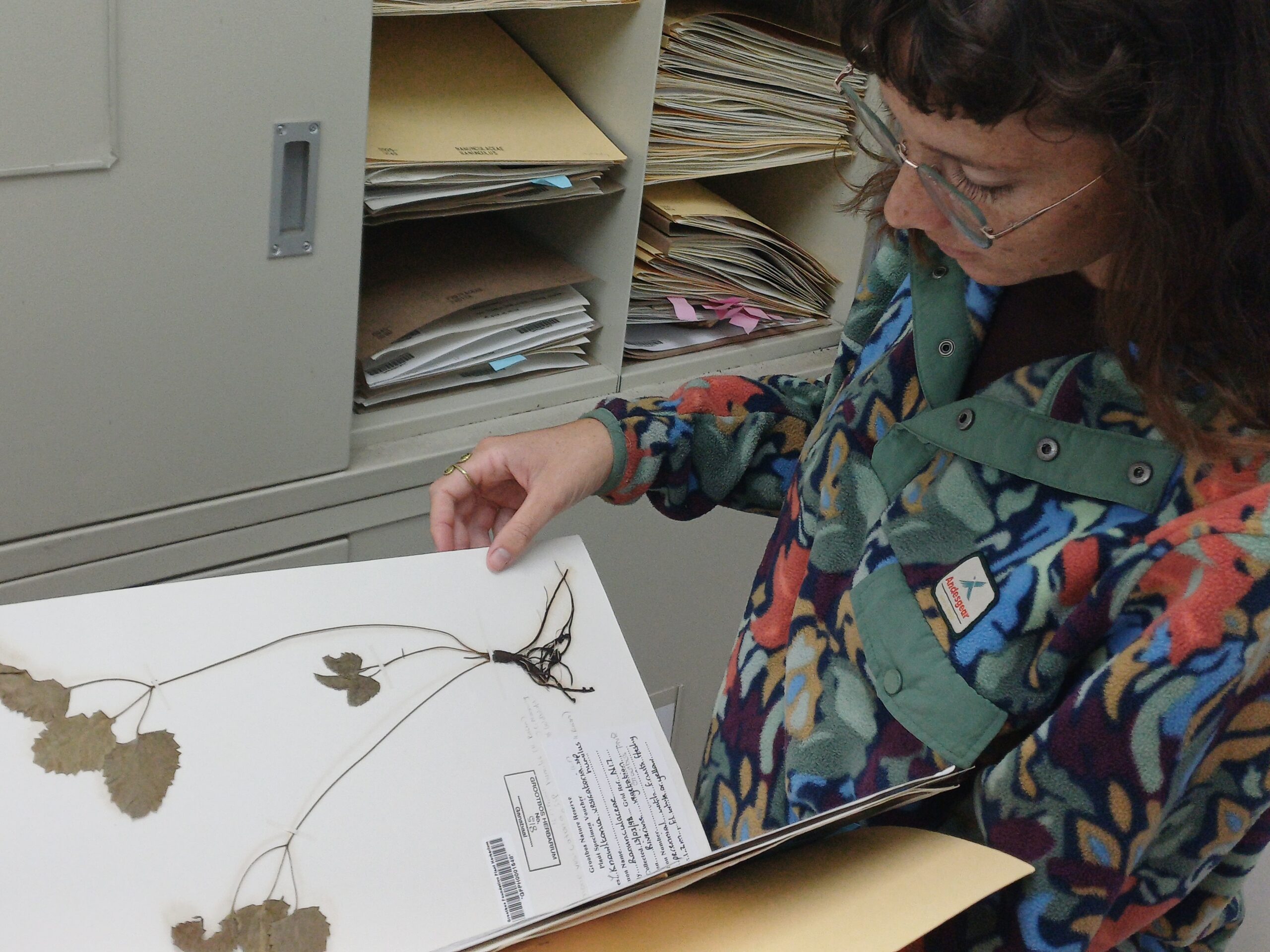
From pressed plants to pixels - Grootbos Foundation Herbarium goes digital
Grootbos Foundation recently welcomed the Natural Science Collections Facility (NSCF) to digitise our collection of almost 2000 plant specimens. For the past 2 years the NSCF herbarium imaging project has focussed on digitising South Africa’s national herbaria with public partners like the University of KwaZulu-Natal Bews Herbarium and the H.G.W.J. Schweickerdt Herbarium of the University of Pretoria. After successfully digitising larger national herbaria, Grootbos Foundation Herbarium was the first private collection to be digitised as part of the NSCF herbarium imaging project! Our plant specimen collection is a product of thirty years of plant surveys conducted across Grootbos Private Nature Reserve and the Walker Bay Region. These surveys have contributed to the description of six new-to-science plant species and a record of 1031 plant species on Grootbos alone.
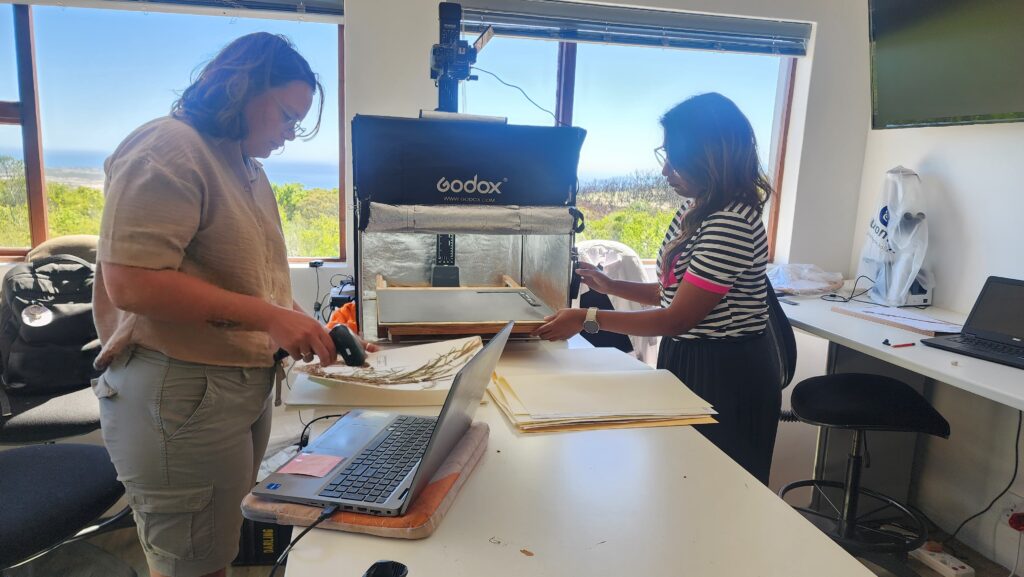
Carly Vlotman (Grootbos Foundation) and Maxine Manickum (NSCF) are giving a unique barcode to every specimen in the Grootbos Foundation Herbarium.
The month-long digitisation process started with giving each specimen a barcode, which serves as a permanent, unique identifier to link physical plant specimens with its digital data and images. Thereafter, every specimen was photographed. These images will eventually be uploaded to a virtual museum which will be accessible to researchers.
Biological collections, such as herbaria, are essential tools for scientific research and environmental education. They play a vital role in the discovery of new-to-science species, they help document species diversity and distribution, and can assist in monitoring species decline. While most recognised herbaria are extensive and house specimens sourced from whole countries or the entire world, the smaller, private collections receive relatively little attention. Localised collections, like the Grootbos Foundation Herbarium, can provide invaluable biological information, since specimens are often collected intensively in a relatively limited geographical region, and in some cases, provide unique distribution records, contributing significantly to Red List assessments.
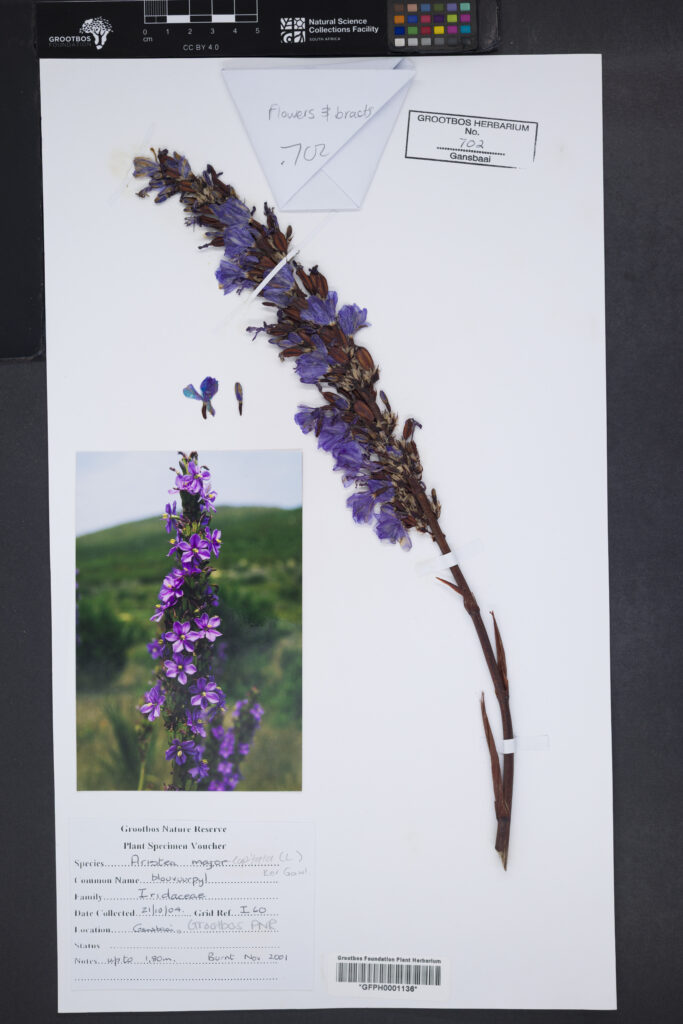
Aristea capitata
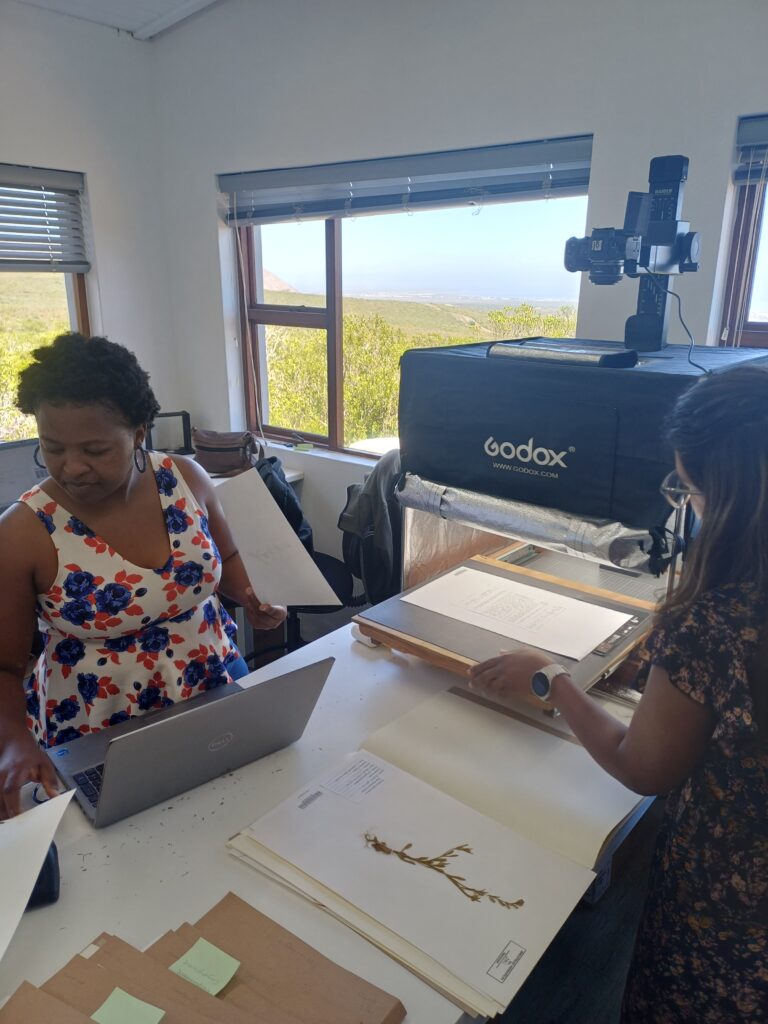
Maxine Manickum and Jabulile Malindi (both NSCF) are taking a photograph of every specimen.
There are a number of benefits to uploading specimen data and images onto a freely accessible virtual museum. Researchers will be able to access biological information quickly and easily, but at the same time, it reduces the need to handle delicate specimens and potentially damage them. While physical specimens require time and effort to maintain their integrity, digitised specimens are largely immune to potential damage or even total loss. Red List assessments that are based on digitised herbaria also inform conservation management decisions.
The digitisation of Grootbos Foundation’s herbarium is a significant step forward for the management of our biological collections!
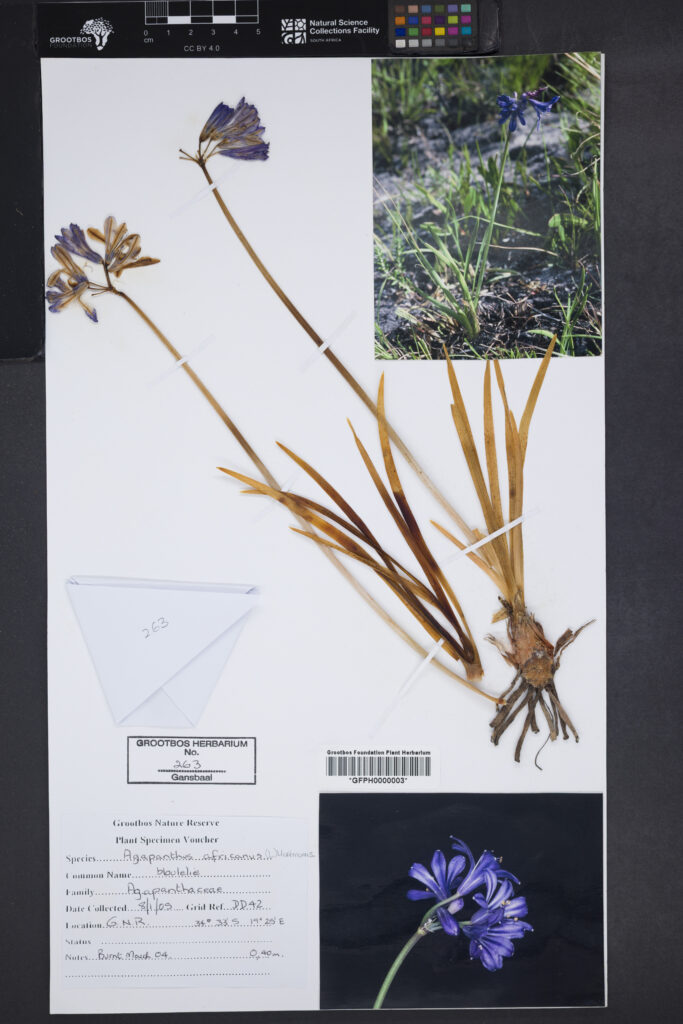
Agapanthus africanus
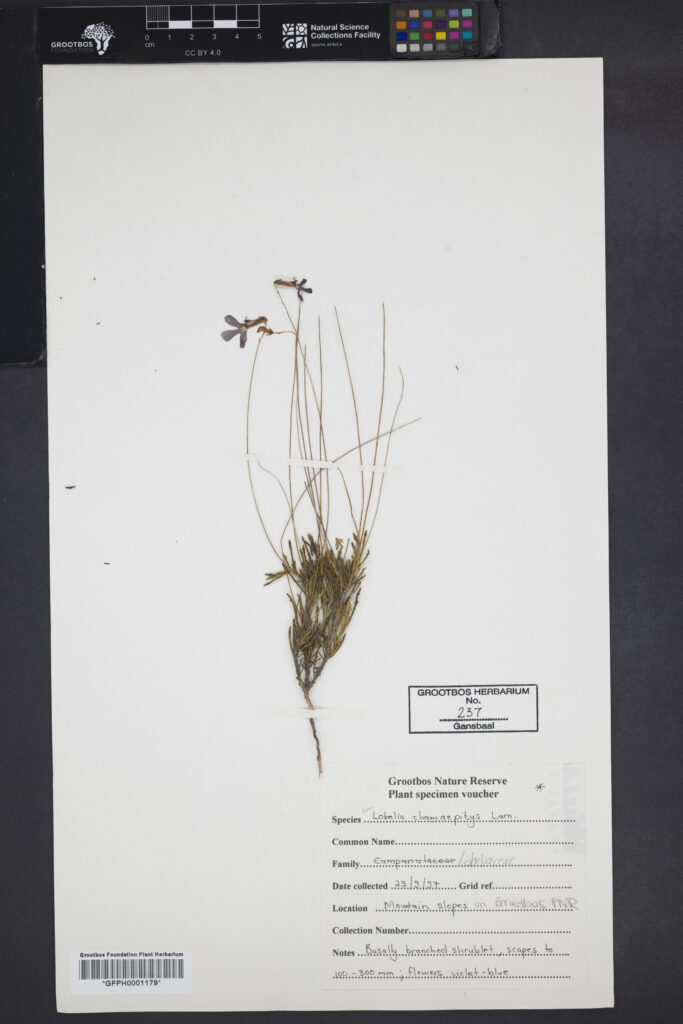
Lobelia chamaepitys Lam.
